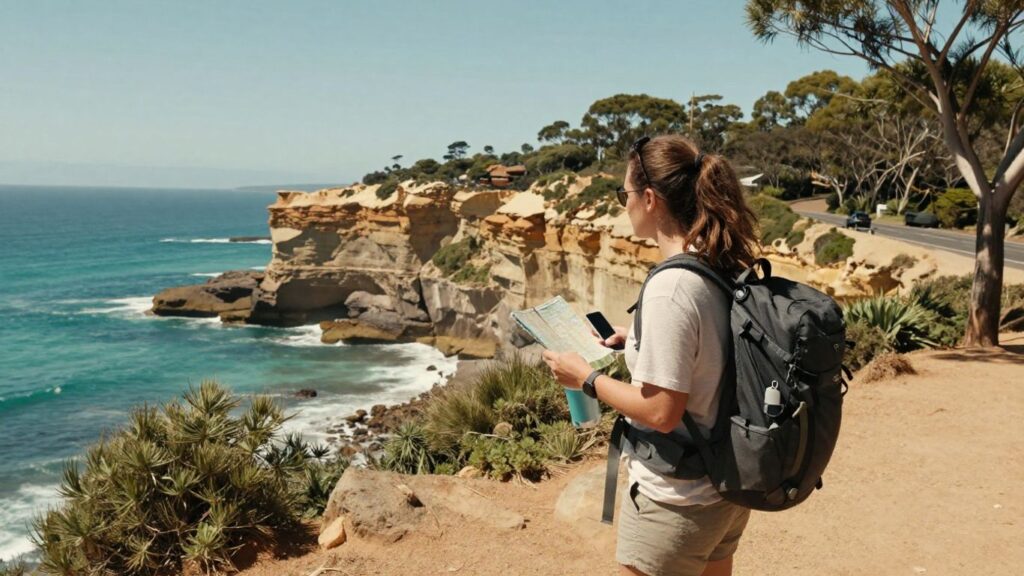
Solo travel safety Australia: A practical guide to exploring with confidence
Key Takeaways
Solo travel safety australia comes down to preparation, patience and paying attention to changing conditions. You can enjoy the country independently without treating every unfamiliar situation as a threat.
- Plan around distances, weather and daylight rather than squeezing too much into one trip.
- Share your route and check-in plans with someone you trust.
- Treat remote roads, beaches, wildlife and extreme weather with respect.
- Keep your phone, documents, money and emergency information accessible.
- Give yourself permission to leave, pause or change plans when something feels wrong.
Plan a safer solo trip across Australia
Australia rewards travellers who plan carefully, but it can punish a rushed itinerary. Cities, coastlines and remote regions have very different conditions, and a route that looks simple on a map may take much longer than expected. Good preparation gives you freedom rather than taking it away.
Choose destinations that match your experience
Start with the kind of trip you can manage comfortably on your own. A city break with reliable public transport may suit a first solo journey, while a remote camping route demands more experience, equipment and confidence with changing conditions.
You do not have to prove anything by choosing the hardest route. Pick places where you can access accommodation, food, phone coverage and help without stretching your skills too far.
Research distances, weather, and transport options
Look beyond the destination name and check the actual journey between stops. Research seasonal weather, road conditions, public transport timetables and whether services run on weekends or public holidays.
A flexible plan is safer when it reflects reality. If heavy rain, heat or a transport disruption affects one part of the route, you will already know which alternatives are practical.
Share your itinerary with someone at home
Give a trusted person your accommodation details, major travel legs and an approximate date for your next update. You do not need to report every coffee stop; a simple pattern of check-ins is easier to maintain and more useful if your plans change.
Tell them what to do if they cannot reach you, such as waiting for an agreed window before contacting your accommodation or local authorities. Message them when you arrive somewhere remote or begin a long journey.
Build flexibility into your travel plans
Avoid booking every night and transfer so tightly that one delay creates a chain of problems. Keep spare time around long journeys, and know which bookings can be changed before you pay for them.
A useful plan has a firm safety framework but room for ordinary travel surprises. You can change a hike, stay an extra night or choose a bus instead of driving without feeling that the whole trip has failed.
Handle Australia’s distances and transportation safely
Distance is one of the main practical issues in Australia, especially when you travel beyond major cities. Fuel, phone coverage, rest stops and repair services may be widely separated. Build transport decisions around the conditions you will actually face, not only the price or the quickest route shown online.
Prepare for long drives and remote roads
Before driving, check fuel availability, road warnings and the condition of the vehicle. Tell someone your route and expected arrival time, and avoid starting a remote drive late in the day when you have little daylight left.
Take regular breaks and never push on when you are tired. On isolated roads, carry water, food, suitable clothing and a charged phone, while remembering that coverage can disappear without warning.
Choose reliable public transportation
In cities and larger regional centres, compare official transport information with the timetable shown in a booking app. Allow extra time for platform changes, cancellations and the walk between a station and your accommodation.
Keep your ticket and destination details easy to find, particularly when you arrive after dark. If a service is cancelled, wait in a well-lit public place while you work out the next option rather than accepting an unsolicited lift.
Book safe accommodation and airport transfers
Read recent accommodation information for location, reception hours, entry arrangements and transport access. Confirm the address before you arrive, especially where several properties have similar names.
For an airport transfer, use the provider or pickup instructions arranged through a recognised booking channel. Share your arrival details with your contact at home and avoid giving a stranger more personal information than they need.
Know what to do if a vehicle breaks down
If your vehicle stops, move as far off the road as conditions allow and turn on hazard lights. Call the rental company or roadside service, provide your location and stay with the vehicle unless emergency services tell you otherwise.
Your response will be easier if you have checked the car before departure and know where the spare equipment, water and basic controls are. Keep doors locked when appropriate and be cautious about accepting help from passing motorists.
Stay safe in cities and tourist areas
Most urban safety decisions are ordinary ones: keep track of your belongings, notice your surroundings and avoid becoming so distracted that you miss a change in the situation. Tourist areas can be crowded and unfamiliar, which makes small habits more valuable. You can stay open to new experiences while still keeping control of your plans.
Protect yourself from common travel scams
Be wary of unexpected requests for money, urgent stories, unofficial tickets and offers that require you to hand over your phone or documents. If someone pressures you to decide immediately, step away and verify the information through an official source.
You can simply say no and continue towards a staffed venue, information desk or busy shop. Do not let embarrassment about appearing impolite override your judgement.
Keep valuables secure in busy places
Carry only what you need for the day and keep your phone and wallet somewhere difficult to reach. A small cross-body bag worn in front can be more practical than an open tote in crowded streets or transport hubs.
Keep a backup payment method and copies of essential documents separately from your main wallet. Keep your essentials close when boarding transport, checking in or taking photos in a crowd.
Stay aware during nightlife and social outings
Tell someone where you are going, arrange your own way back and watch your drink from the moment it is served. You do not need to match the pace of people you have just met, and you can leave without explaining yourself.
If a conversation or venue starts to feel uncomfortable, move towards staff, security or a group of people you trust. Limit personal details about where you are staying until you know someone better.
Use safe routes after dark
Choose well-lit streets with regular foot traffic, and check the route before leaving rather than wandering while looking at your phone. A short taxi or rideshare journey may be preferable to an isolated walk, particularly with luggage.
Keep your phone charged and avoid wearing headphones that block surrounding sounds. If you think someone is following you, enter a staffed business or transport hub and ask for assistance instead of walking directly to your accommodation.
Prepare for Australia’s beaches and outdoor activities
Australia’s beaches and walking trails can look inviting while still carrying serious risks. Conditions can change quickly, and a quiet stretch of coast may have no lifeguard, shade or nearby help. Check local advice before you go, then adjust your plans to your experience and the day’s conditions.
Follow surf and beach safety signs
Swim between the flags where lifeguards are present, and follow signs about closures, rocks, marine hazards and access restrictions. Do not assume a calm-looking beach is safe for swimming, especially if you cannot see local warnings.
Ask a lifeguard or visitor centre worker about current conditions if you are unsure. Their local knowledge is more useful than relying on how the water appeared earlier in the day.
Understand rip currents and strong waves
A rip current can carry you away from shore even when the water looks manageable. If you are caught, try to stay calm, float and signal for help; avoid exhausting yourself by fighting directly against the current.
Learn the local advice before entering the water and do not swim alone in unfamiliar conditions. If the sea looks rough or there is no safe supervised area, choose a different activity.
Hike with enough water and offline maps
Download maps before leaving coverage and tell someone your intended route, turnaround point and expected return time. Carry more water than you expect to need, along with sun protection, sturdy footwear and a charged phone.
A simple route can become difficult in heat or after a wrong turn. Turn back early if you are tiring, losing the track or running short of water; reaching the planned viewpoint is never worth a risky return journey.
Check conditions before visiting national parks
Check park alerts, closures, weather forecasts and access rules before setting out. Some tracks require more time, preparation or navigation skill than their distance suggests.
The following quick check can help you decide whether to continue with the plan:
- Is the track open, and can you return before dark?
- Do you have enough water for delays as well as the planned walk?
- Does someone know your route and expected check-in time?
- Can you reach help if weather or injury changes the situation?
After that check, be willing to choose a shorter walk or a guided option. Conditions matter more than completing an ambitious itinerary.
Protect yourself from Australia’s wildlife and natural hazards
Wildlife encounters are part of travelling through Australia, but they are best enjoyed from a sensible distance. Natural hazards also vary by region and season, from intense heat to storms, flooding and fires. Local warnings deserve more attention than assumptions based on a previous trip.
Keep your distance from wild animals
Never approach, feed or corner an animal for a photograph. Stay on marked paths where possible, keep food secured and follow instructions at parks, beaches and wildlife areas.
If an animal changes its behaviour because you are nearby, you are too close. Move away calmly and give it a clear route rather than trying to get a better view.
Prepare for snakes, spiders, and insects
Wear suitable footwear in grass, bush and rocky areas, and check shoes or clothing that have been left outside. Use insect protection where local conditions call for it, particularly around dusk and near wetlands.
If you are bitten or stung, seek urgent help and follow directions from emergency operators or local health professionals. Do not rely on improvised treatments or online guesses about what caused the injury.
Manage heat, sun exposure, and dehydration
Plan demanding activities for cooler parts of the day, drink regularly and take breaks in shade. Wear a hat, protective clothing and sunscreen, and remember that wind or cloud does not remove the risk of sun exposure.
Heat can affect your judgement before you realise how unwell you feel. Stop early, cool down and ask for help if you develop concerning symptoms rather than trying to finish the route.
Check bushfire, flood, and cyclone warnings
Check official warnings before travelling and again before heading into rural or coastal areas. Do not enter closed roads or tracks, and take evacuation advice seriously even if the weather near you appears normal.
Keep your accommodation informed if you are unsure about a warning, and identify where you would go if conditions changed. A plan that avoids the affected area is usually simpler than trying to outrun a developing hazard.
Stay connected and handle emergencies
Connectivity is a safety tool, but it is not guaranteed everywhere in Australia. Prepare for dead zones and battery problems before you leave a town or accommodation. Knowing how to ask for help can make a stressful situation much more manageable.
Set up a local phone plan or eSIM
Check whether your phone is unlocked and whether your chosen plan covers the regions on your route. Download key maps and booking details while connected, and carry a power bank for long travel days.
A second option, such as accommodation landlines or a written list of contacts, is useful when mobile service fails. Do not assume a phone will connect simply because it worked in the last town.
Learn Australia’s emergency number
Australia’s emergency number is 000 for police, fire or ambulance assistance. Know your location before calling if you can, and explain whether the situation involves immediate danger, injury or a fire.
For non-urgent matters, use the relevant local service rather than tying up emergency lines. If you are unsure, ask staff at your accommodation or a public facility how to contact the right help.
Find nearby hospitals, pharmacies, and police stations
Save the address of your accommodation and identify nearby services when you arrive in a new place. A quick check during daylight is easier than searching while distressed, unwell or without transport.
Reception staff, visitor centres and local health services can often point you towards the appropriate facility. Keep in mind that regional areas may have fewer services and longer travel times.
Keep digital and printed copies of important documents
Store copies of your passport, travel bookings, insurance details, emergency contacts and identification securely online, and keep a printed set separate from the originals. Avoid leaving sensitive documents visible on a shared device.
Check that you can access the copies without relying on a single app or phone. If something is lost, having the details ready can reduce delays while you arrange replacements or assistance.
Make smart choices as a solo traveler
Solo travel does not mean handling every problem alone. It means making decisions without waiting for a companion to notice a risk first. A calm routine helps you distinguish an ordinary travel nuisance from a situation that deserves a change of plan.
Trust your instincts without overreacting
A vague uneasy feeling is a reason to pause, move somewhere public and reassess. You do not need proof that a person or place is dangerous before choosing not to stay.
At the same time, avoid letting every unfamiliar custom become a crisis. Check facts, ask a reliable local source and give yourself time to decide when there is no immediate threat.
Meet people while keeping personal boundaries
Hostels, tours, classes and cafés can make solo travel feel more social, but friendliness does not require instant trust. Keep control of your accommodation details, money, documents and route until you know someone well.
Meet new people in public places and tell a contact where you are going. You can enjoy company while still keeping your own transport home and the option to leave.
Know when to change your plans
Change course when conditions deteriorate, transport becomes unreliable, you are too tired to continue or a situation repeatedly makes you uncomfortable. A booking fee or missed attraction is a smaller problem than being stranded or pressured.
Make changes early when possible. Staff at accommodation, transport hubs and visitor centres may have better local information than you can find while rushing.
Create a simple daily safety routine
A short morning check can keep practical details from slipping. Review the weather, your route, battery level, water supply and the time you need to be back before dark.
Keep the routine simple enough to use every day:
- Tell your contact at home the day’s broad plan.
- Charge your phone and carry a backup battery.
- Check local transport, park and weather updates.
- Carry water, identification and only the valuables you need.
This is not about travelling nervously. It is a small reset that leaves more attention for the places you came to see.
Conclusion
Solo travel safety australia is less about avoiding every unknown and more about preparing for the predictable ones. Plan with distance and conditions in mind, keep people informed, respect local warnings and listen when your instincts tell you to slow down. With those habits in place, you can explore Australia independently while giving yourself sensible ways to stay connected and change direction.
Frequently Asked Questions
Is Australia safe for solo travellers?
Australia can be a rewarding destination for solo travellers, but safety varies by location and conditions. Plan carefully, follow local advice and take extra care on remote roads, beaches and outdoor routes.
What should I tell someone at home before travelling alone?
Share your accommodation details, major transport legs and expected check-in times. Agree on what they should do if they cannot reach you after the time you set.
Is it safe to drive alone in regional Australia?
It can be, provided you prepare for distance, fuel gaps, fatigue, changing weather and limited phone coverage. Check road conditions, tell someone your route and carry water and basic supplies.
What should I do if I get caught in a rip current?
Try to stay calm, float and signal for help rather than exhausting yourself by swimming directly against the current. Follow local beach advice and ask lifeguards about conditions before entering the water.
How can I stay safe when meeting people while travelling alone?
Meet in public places, protect your accommodation and document details, and keep your own way home. You can be friendly without sharing more personal information than feels comfortable.
What is Australia’s emergency number?
Call 000 for police, fire or ambulance assistance when there is an immediate emergency. Give the operator your location and describe what help you need.
Should I avoid remote areas on a solo trip?
Not necessarily, but remote travel needs more preparation than a city visit. Check conditions, carry enough water, download maps, share your route and choose activities that match your experience.